
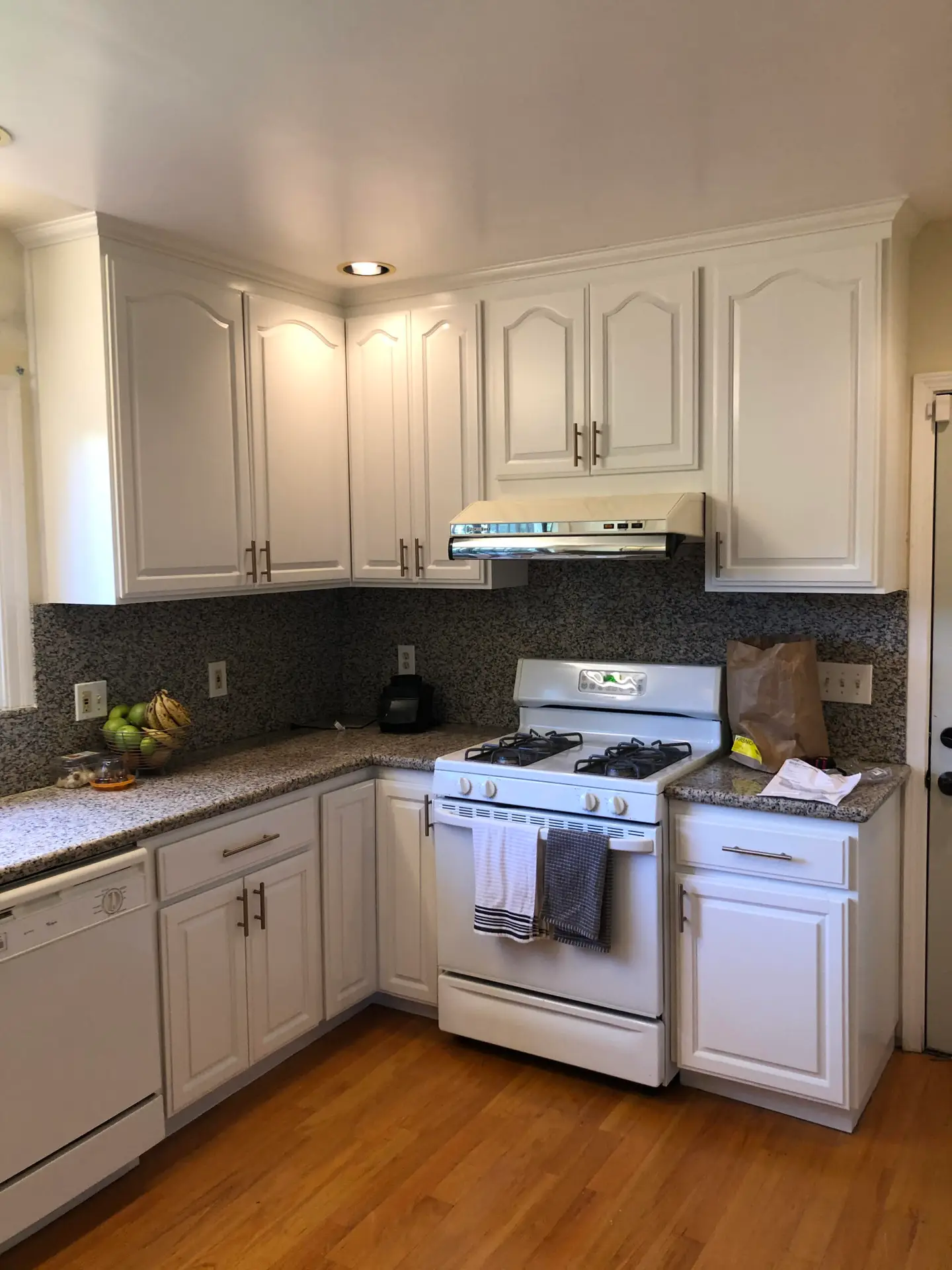
How Much Does Cabinet Refinishing Cost in Walnut Creek?
How Much Does Cabinet Refinishing Cost in Walnut Creek? Cabinet refinishing in Walnut Creek typically costs $4,000 to $15,000 for a full kitchen and $1,280
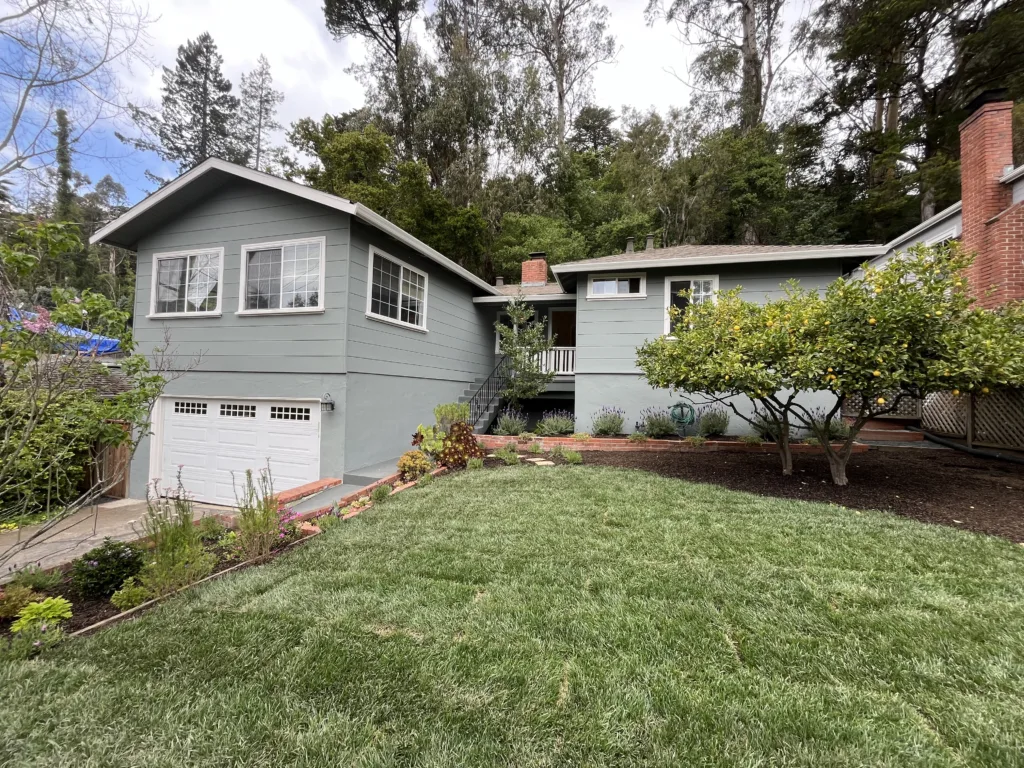
Craftsman bungalows are the most common architectural style across Oakland and the East Bay. You will find them lining the streets of Rockridge, Temescal, North Oakland, Berkeley, Piedmont, and Albany. These homes were built to connect with nature through warm materials, exposed wood, and earth-toned color palettes. The right exterior paint colors honor that tradition while making the home feel current and well-maintained.
Choosing colors for a Craftsman is different from choosing colors for a modern home. Craftsman bungalows have multiple distinct surfaces that each need their own color: the main siding, the trim around windows and eaves, the porch columns, the front door, and sometimes a secondary band of shingles in the gable. A two-color scheme that works on a ranch home will look flat and incomplete on a Craftsman.
This guide covers the color principles that work on Oakland and East Bay Craftsmans, specific paint recommendations from Benjamin Moore and Sherwin-Williams, and the common mistakes we see homeowners make.
The Arts and Crafts movement that produced the Craftsman style in the early 1900s was built on the idea of harmony with nature. Original Craftsman homes were painted in colors drawn from the natural landscape: sage greens, warm browns, muted golds, clay reds, and slate blues. Pure white siding was almost never used on these homes. Bright, cool colors fight the warm wood and stone details that define the style.
Oakland’s Craftsman neighborhoods reinforce this. Walk through Rockridge or Temescal and you will see homes in olive green with cream trim, warm taupe with dark brown accents, deep red with mustard details. The homes that look best are the ones where the paint colors feel like they belong with the wood, stone, and brick elements rather than competing with them.
The general rule: warm earth tones for the body, a complementary neutral for the trim, and a deeper accent for the front door and window sash. Three to five colors total. Each surface gets its own color, which is what gives Craftsman homes their visual depth.
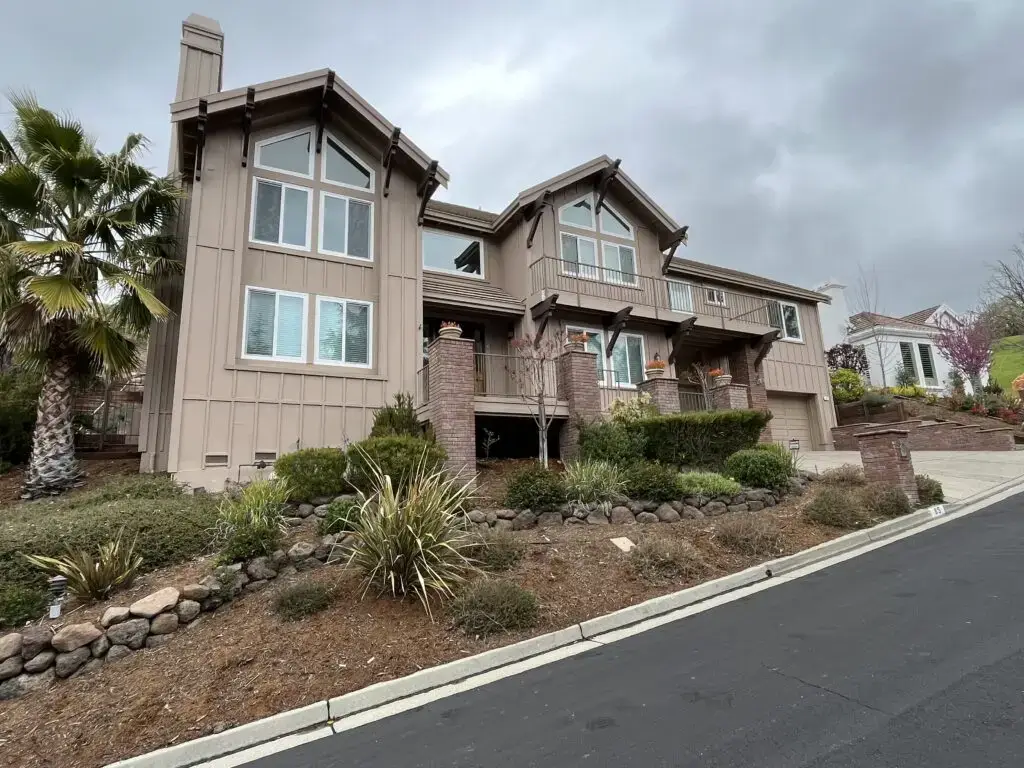
These are the combinations we paint most often on Craftsman bungalows across Oakland, Berkeley, Piedmont, and Albany. Each uses specific products from Benjamin Moore and Sherwin-Williams.
The most popular Craftsman color in the East Bay for good reason. Sage green connects the home to the mature trees and landscaping found on most Oakland Craftsman streets.
Body: Benjamin Moore Louisburg Green HC-113 or Sherwin-Williams Saybrook Sage SW 6179 Trim: Benjamin Moore Navajo White OC-95 or Sherwin-Williams Roman Column SW 7562 Front Door: Benjamin Moore Georgian Brick HC-50 or Sherwin-Williams Carnelian SW 7580 Best for: Tree-lined streets in Rockridge, North Oakland, and North Berkeley where the green palette blends with the canopy.
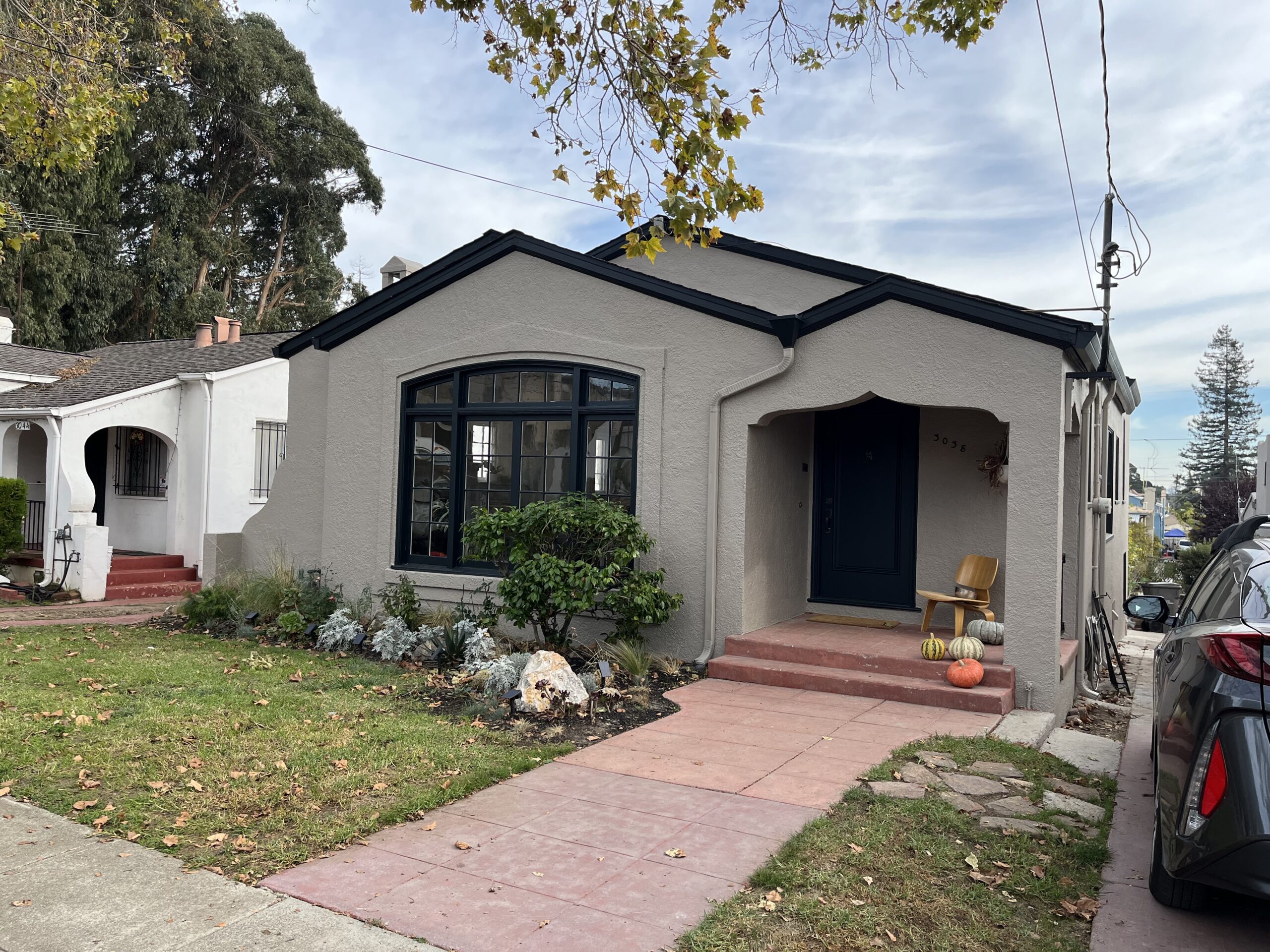
A grounded, sophisticated palette that lets the architectural details do the talking. Warm taupe is the safest choice for homeowners who want something beyond beige but not as bold as green or red.
Body: Sherwin-Williams Worldly Gray SW 7043 or Benjamin Moore Smokey Taupe 983 Trim: Sherwin-Williams Compatible Cream SW 6387 or Benjamin Moore Linen White OC-146 Front Door: Benjamin Moore Wrought Iron 2124-10 or Sherwin-Williams Black Fox SW 7020 Best for: Larger Craftsmans in Piedmont and Albany where the home sits close to the street and a quieter palette reads better from the sidewalk.
A bolder combination rooted in the original Arts and Crafts palette. The olive body provides the natural connection while the mustard accents add warmth without being loud.
Body: Sherwin-Williams Rookwood Sash Green SW 2811 or Benjamin Moore Wethersfield Moss HC-110 Trim: Sherwin-Williams Believable Buff SW 6120 or Benjamin Moore Henderson Buff HC-15 Front Door: Benjamin Moore Audubon Russet HC-51 Best for: Homes with natural stone porch columns or brick chimneys where the warm palette plays off the masonry. Common in Temescal and parts of Berkeley near the hills.
A modern option that has grown steadily in Oakland over the past few years. Slate blue reads as traditional from a distance but feels updated up close. It works best as a muted, dusty blue rather than a bright or navy blue.
Body: Benjamin Moore Smoke 2122-40 or Sherwin-Williams Serious Gray SW 6256 Trim: Benjamin Moore White Dove OC-17 or Sherwin-Williams Alabaster SW 7008 Front Door: Benjamin Moore Hale Navy HC-154 or Sherwin-Williams Naval SW 6244 Best for: Craftsmans on wider lots with good natural light. The blue can read dark on narrow lots with heavy shade. Works well in the Oakland Hills and Piedmont where sun exposure is stronger.
The boldest traditional option. Deep red was a popular original color on California Craftsman homes, and it still makes a strong statement when applied with the right trim pairing.
Body: Benjamin Moore Georgian Brick HC-50 or Sherwin-Williams Fired Brick SW 6335 Trim: Benjamin Moore Monterey White HC-27 or Sherwin-Williams Creamy SW 7012 Front Door: Benjamin Moore Black Beauty 2128-10 or stained natural wood Best for: Corner lots and homes with strong street presence. The red body commands attention, so it works best where the home has room to breathe. Seen occasionally in Adams Point and parts of Alameda.
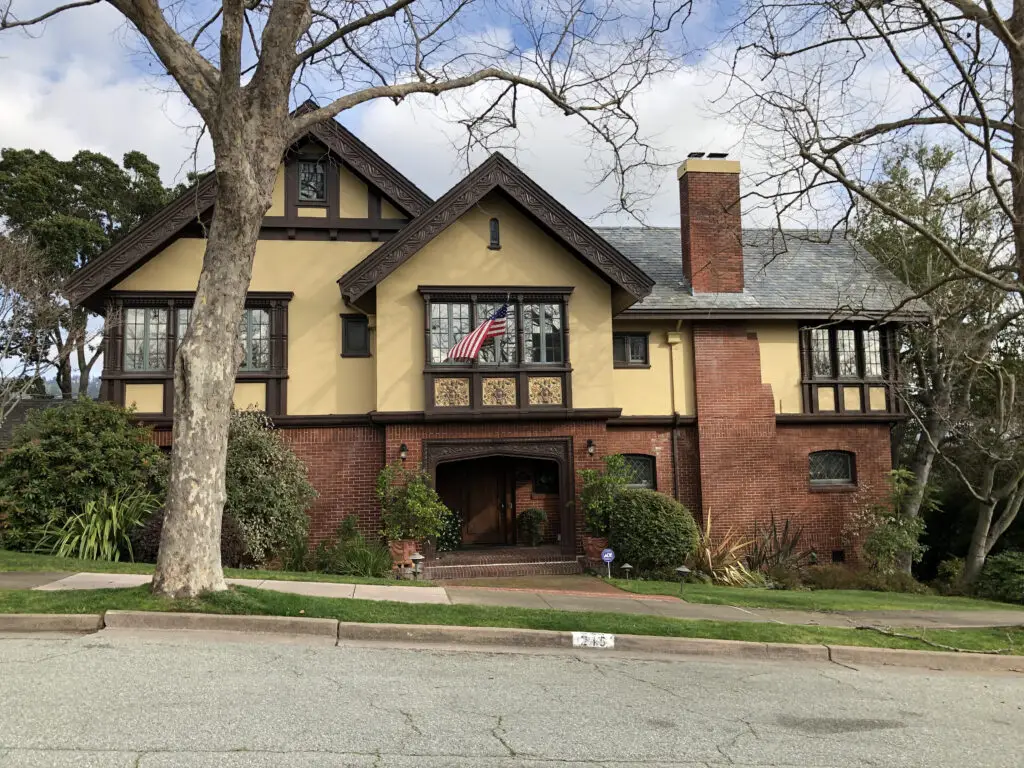
One of the most common mistakes on Craftsman exteriors is painting the exposed rafter tails, knee braces, and porch beams. These elements were designed to show natural wood grain. Painting them removes the handcrafted character that defines the style.
If the wood is in good condition, apply a semi-transparent stain in cedar, walnut, or cherry tones to protect it while preserving the grain. If previous owners painted the wood and you want to restore it, stripping and sanding back to bare wood is possible but labor-intensive. In many cases, a solid stain in a warm brown that mimics natural wood is a practical middle ground.
Porch columns are a judgment call. Tapered columns on stone piers are often painted to match the trim, which is historically appropriate. Columns that are entirely wood can go either way depending on the look you want.
For more on exterior prep and how we handle wood details, see our exterior painting services page.
Not every color works on every home. These are the choices we steer Oakland homeowners away from on Craftsman bungalows.
Cool grays like Repose Gray or Passive have blue and purple undertones that clash with the warm wood and stone elements. Cool gray works on modern or farmhouse styles but fights the Craftsman aesthetic.
Pure white siding was not used on original Craftsman homes and still looks out of place. If you want a light scheme, use cream, putty, or warm ivory instead.
Pastels like mint green, baby blue, or blush pink belong on Cape Cods and coastal cottages, not on a style rooted in substance and natural materials.
Single-color schemes where the body and trim are the same color or nearly the same color. Craftsman homes have layered architectural details designed to be highlighted with contrasting colors. Painting everything one color flattens the facade.
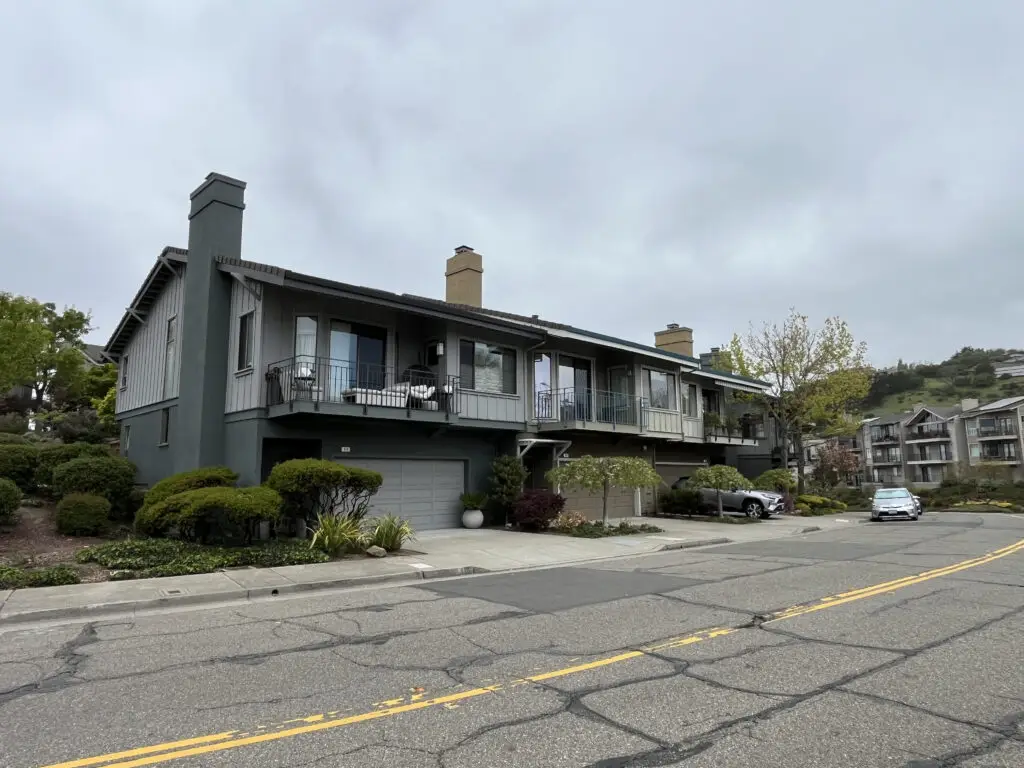
Color selection for Oakland Craftsmans is not just about aesthetics. East Bay weather plays a role.
Marine layer and fog are heaviest in West Oakland, Emeryville, Alameda, and parts of Berkeley near the Bay. Darker colors hold up better visually in foggy areas because they maintain contrast even in flat light. Light colors can look washed out under overcast skies.
Sun exposure in the hills is intense in Oakland Hills, Piedmont, and Berkeley Hills. Strong UV causes darker colors to fade faster. If your home gets heavy afternoon sun on a south or west-facing wall, choose a color with good fade resistance or expect to repaint that wall sooner. Benjamin Moore Aura and Sherwin-Williams Emerald lines offer strong UV resistance.
Seasonal rain means exterior paint needs to breathe. Acrylic latex paints that allow moisture vapor to pass through without trapping it behind the film are essential. This matters especially on older Craftsman siding where the wood substrate may not have a modern moisture barrier.
For a full breakdown of how East Bay weather affects exterior paint, see our exterior painting services page.
Color selection is part of our process on every exterior painting project. We bring fan decks from Benjamin Moore and Sherwin-Williams, discuss options based on the architectural style and neighborhood context, and apply test patches on the actual surfaces so you see the colors in your home’s specific light conditions before committing.
We also consider the neighboring homes. A color that looks great in isolation can clash with what is on either side of you. This matters especially on the tighter lots in Rockridge, Temescal, Albany, and Berkeley where homes are close together.
If you are unsure where to start, bringing us in for a walkthrough and color conversation before finalizing your palette saves time and avoids regret.
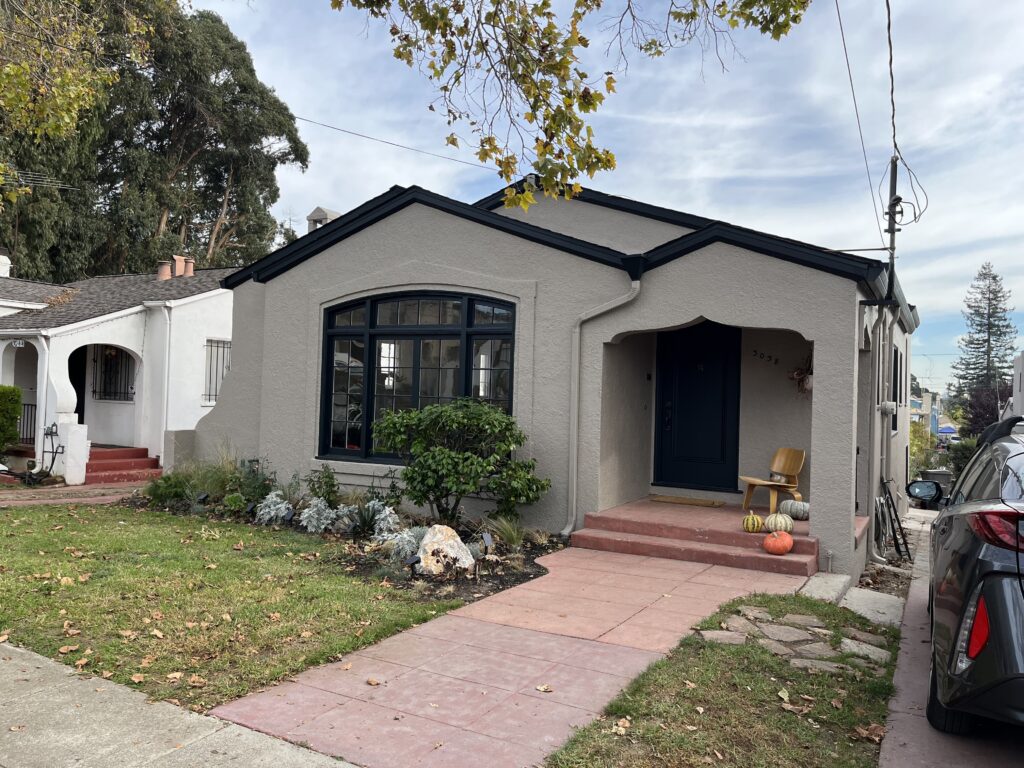
Three to five. The main siding gets the body color. Window and door trim gets a second color. The front door and possibly window sash get an accent color. If the home has a secondary shingle band in the gable, that often gets a slightly different shade from the main siding. Each surface having its own color is what gives a Craftsman its visual depth.
No, if they are natural wood in good condition. Exposed rafter tails, knee braces, and porch beams are signature Craftsman details meant to show wood grain. Use a semi-transparent stain rather than paint. If previous owners already painted them, you can either strip back to bare wood or apply a solid stain in a warm brown tone.
You can, but pure white siding does not match the architectural tradition. Original Craftsman homes used warm, earthy tones. If you want a light exterior, choose cream, putty, warm ivory, or a light warm gray instead of bright white. These options honor the style while keeping the home feeling light and fresh.
Most Craftsman exteriors in Oakland last 7 to 10 years between repaints, depending on sun exposure, moisture, and the quality of the previous paint job. Homes in the hills with heavy sun may need repainting closer to 7 years. Homes with fog exposure may see mildew buildup that requires attention even if the paint itself is holding. For more detail, see our post on how long exterior paint lasts in the Bay Area.
Yes. Color consultation is part of every exterior painting estimate from Integrity Paint. We bring paint samples, discuss options based on your home’s style and neighborhood, and apply test patches so you can see colors on your actual surfaces before committing.
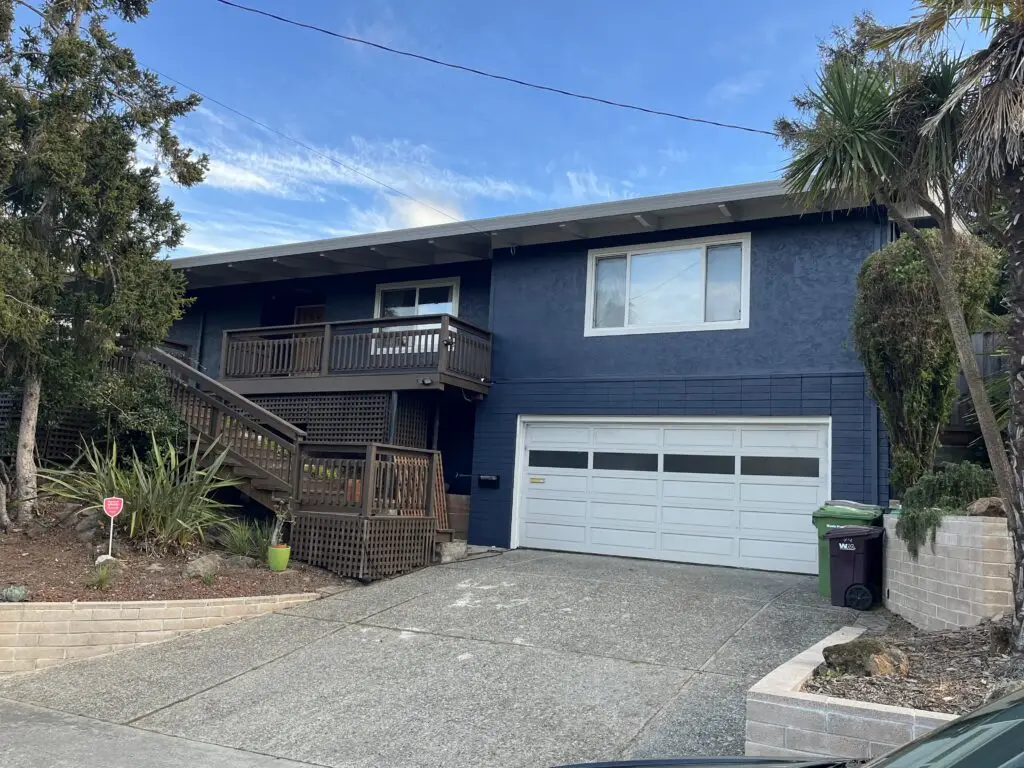
Get a free exterior painting estimate with color consultation included. We serve Oakland, Piedmont, Berkeley, Albany, and communities across the East Bay.
How Much Does Cabinet Refinishing Cost in Walnut Creek? Cabinet refinishing in Walnut Creek typically costs $4,000 to $15,000 for a full kitchen and $1,280
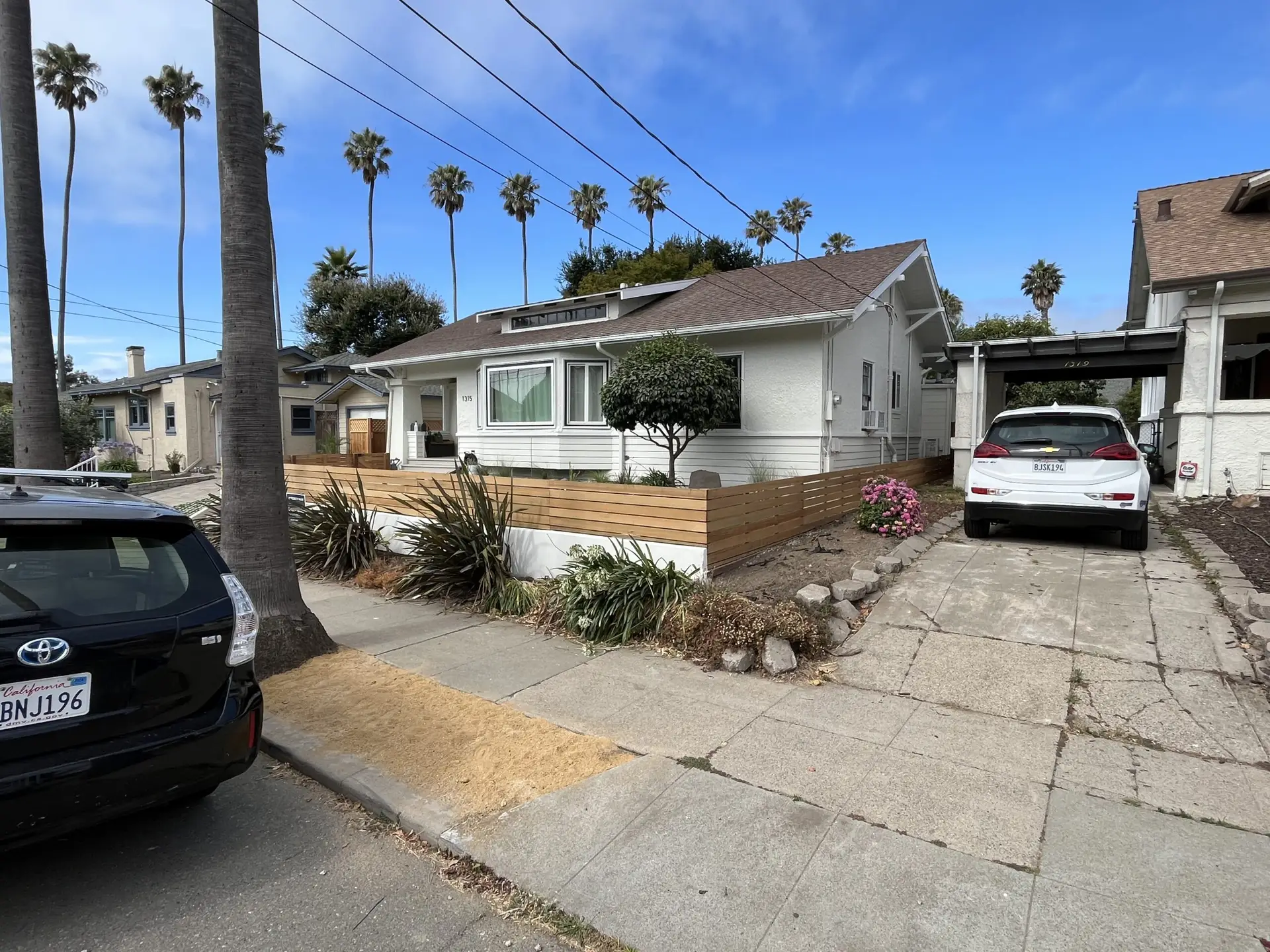
How Much Does It Cost to Paint a House in Walnut Creek? Most house painting projects in Walnut Creek fall between $3,000 and $15,000, depending
How Often Should You Paint a Stucco House in the East Bay? Most stucco homes in the East Bay need repainting every 7 to 10