How to Prepare Your East Bay Home for Exterior Painting

Ask any experienced Oakland exterior painting specialist and they will tell you the same thing: the prep work is where the job is won or lost. A fresh coat of paint on a surface that was not properly cleaned, repaired, and primed will start failing within a year. But prep work done right in the East Bay is not the same as prep work done right in Sacramento or the Central Valley. The marine layer, coastal fog, and moisture conditions across Oakland, Berkeley, Piedmont, and the East Bay flatlands create a specific set of challenges that affect everything from when you should schedule the job to which products will hold up over time.

This guide covers everything East Bay homeowners need to know before exterior house painting in Oakland begins. Whether you are hiring local painters near you or want to understand what your contractor should be doing before the first brush hits the wall, this is your complete reference.

Why Surface Preparation Matters More in the East Bay

Exterior paint preparation is important everywhere, but the East Bay climate makes it especially critical. The combination of morning marine layer, afternoon sun, and seasonal temperature swings between the hills and the flatlands puts significant stress on exterior paint systems. Paint that bonds correctly to a clean, dry, properly primed surface can last eight to twelve years in East Bay conditions. Paint applied over dirty, damp, or compromised surfaces may begin peeling within twelve to eighteen months.

The most common exterior painting failures we see on Oakland and East Bay homes come down to two things: surfaces that were not adequately cleaned before painting, and paint applied during or shortly after foggy morning conditions when the substrate still holds moisture. Both are avoidable with the right prep approach and scheduling.

East Bay Tip: Morning fog burns off later in the East Bay than most homeowners expect, especially in the flatlands and west-facing neighborhoods. Experienced exterior painting contractors in Oakland know to start later in the morning and confirm surfaces are fully dry before applying any primer or paint.

6785d6aebe84abaac5cdcb21 1

Choosing the Right Time of Year for Exterior Painting in the East Bay

Timing is one of the most overlooked preparation decisions for exterior house painting in Oakland and the surrounding East Bay. Get it right and your paint has the best possible conditions to cure and bond. Get it wrong and even the best prep work can be undermined.

The Best Months for Exterior Painting in Oakland

Late spring through early fall, roughly April through October, is the ideal window for exterior painting in most East Bay neighborhoods. During these months, temperatures are warm, rainfall is minimal, and afternoon sun is reliable enough to dry surfaces thoroughly after morning fog clears.

July through September tends to be the peak window in Oakland and Piedmont, where fog patterns are more predictable and afternoon conditions are consistently good for paint application and curing. Residential painters who work regularly in the East Bay will build their scheduling around these patterns.

Months to Avoid or Approach Carefully

November through February brings the highest rainfall and the most persistent marine layer across the East Bay. Exterior painting during these months is not impossible but requires significantly more caution and monitoring. Any surface moisture at the time of application will compromise adhesion.

East Bay Tip: Homes in the Oakland hills and Piedmont can have very different weather conditions than homes in Alameda or San Leandro on the same day. A top-rated Oakland painting contractor familiar with these micro-climate differences will account for them when scheduling your project.

The Daily Timing Window

Even during ideal months, daily timing matters. Marine layer moisture typically lingers on east-facing surfaces until mid-morning. West and north-facing walls, which receive less direct sun, can stay damp even longer. Best practice for Oakland exterior painting specialists is to begin prepping and masking in the morning, confirm all surfaces are dry by touch and moisture meter, and start applying paint no earlier than late morning on most days.

Jamie before 1

Power Washing: The First and Most Important Prep Step

No surface on an East Bay home should receive new paint without being thoroughly cleaned first. Years of fog, salt air, airborne particulates from Oakland traffic corridors, mildew, and biological growth accumulate on exterior surfaces and prevent paint from bonding correctly. Power washing is the standard first step for all residential exterior painting services in the East Bay.

What Power Washing Removes

  • Dirt, dust, and environmental grime from coastal air and traffic exposure
  • Mildew and algae growth common on north-facing and shaded surfaces in foggy neighborhoods
  • Chalking from oxidized old paint, which acts as a barrier between the new coat and the substrate
  • Loose or peeling paint that would otherwise bubble under a new coat
  • Salt and mineral deposits common on homes in Alameda and other Bay-adjacent communities

Power Washing Timing

After power washing, surfaces must be allowed to dry completely before any primer or paint is applied. In the East Bay, this typically means waiting a minimum of 24 to 48 hours, and sometimes longer for north-facing or heavily shaded areas that receive limited sun. Rushing this step is one of the most common causes of early paint failure on Oakland homes.

East Bay Tip: If your contractor power washes and starts painting the same day or the next morning, that is a red flag. Surfaces in East Bay conditions need adequate drying time, especially wood siding, fascia boards, and trim on older Craftsman and Victorian homes where moisture can soak deeper into the substrate.

IMG 4640 768x1024 heic

Surface Repairs to Complete Before Exterior Painting Begins

Older homes in Oakland, Piedmont, and Berkeley require a careful inspection and repair phase before any paint goes on. Many East Bay homes were built between 1900 and 1960 and have accumulated decades of deferred maintenance that becomes visible once exterior paint starts failing. Painting over unaddressed damage does not fix it. It hides it temporarily while the underlying problem continues to worsen underneath.

Wood Rot Inspection and Repair

Wood rot is extremely common on East Bay homes, particularly on fascia boards, window sills, soffits, and the lower courses of wood siding. The combination of fog-driven moisture, infrequent painting, and original-growth wood that is no longer available for replacement creates conditions where rot progresses faster than many homeowners realize.

Before exterior painting begins, every wood surface should be probed for soft spots. Any rot discovered needs to be cut out and replaced or filled with an epoxy wood consolidant and filler rated for exterior use before priming. Painting over soft or rotted wood will produce a finish that fails within months.

Integrity Paint and General Contracting handles surface repairs as part of our exterior painting process. If rot or structural issues are found during prep, we address them before paint is applied

Caulking and Sealing

Gaps around windows, doors, trim boards, and where different materials meet are entry points for moisture that drive paint failure and structural damage. In East Bay conditions where morning fog and seasonal rain bring consistent moisture exposure, unsealed gaps are especially problematic.

All existing caulk should be inspected before painting. Cracked, shrinking, or separating caulk should be removed and replaced with a paintable exterior caulk rated for the specific materials involved. This step is non-negotiable on older Oakland Craftsman and Victorian homes where original caulk or glazing compound may be decades old.

Stucco Repair

Many mid-century and Spanish-style homes across Oakland, Piedmont, and Berkeley have stucco exteriors. Stucco cracks, chips, and surface deterioration must be patched and allowed to fully cure before painting. Painting over unrepaired stucco damage allows moisture to enter the cracks and continue widening them under the new coat.

Hairline cracks in stucco are often addressable with a high-quality elastomeric caulk or patching compound. Larger damaged areas require proper stucco patching in multiple coats with appropriate cure time between applications.

Scraping Loose and Peeling Paint

Any paint that is already peeling, bubbling, or flaking must be scraped back to a firm edge before new paint is applied. On older East Bay homes, this can be time-consuming because multiple layers of old paint may be present. But it is essential. New paint will not bridge over loose edges and will begin peeling in the same spots within a season.

Hand scraping is typically followed by sanding to feather the edges of any remaining paint and create a smooth transition between bare substrate and intact old paint. This step is what separates a professional exterior painting job from a shortcut that looks fine for a year before failing.

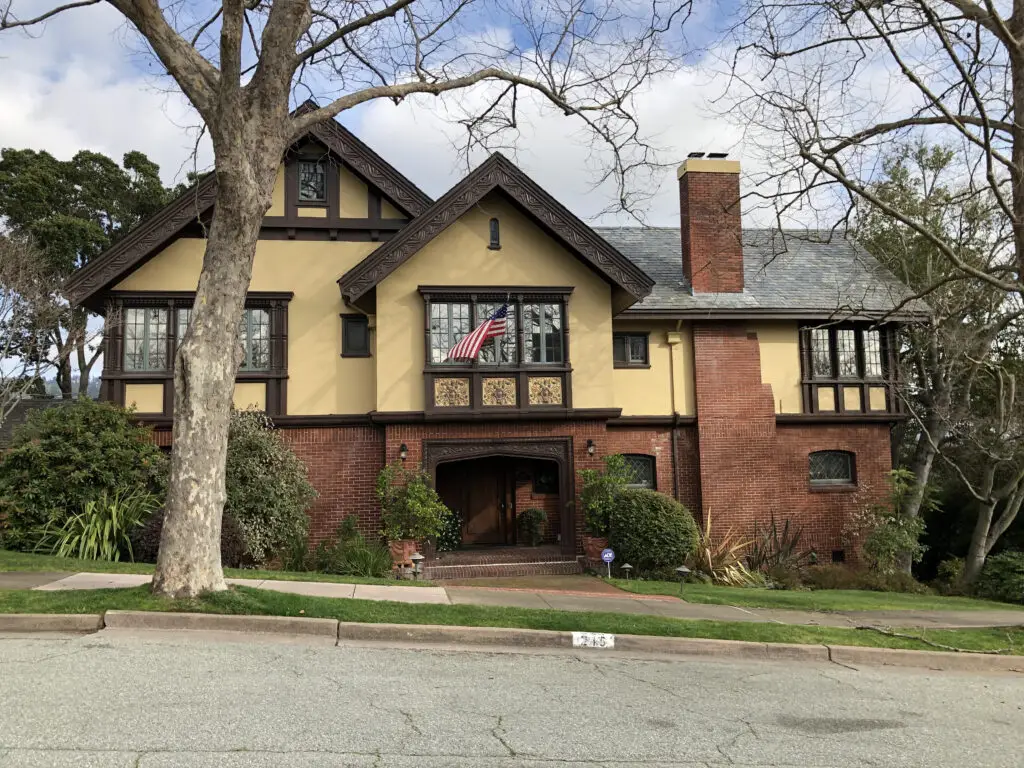
exterior painting of a julia morgan home in the bay area

Priming: Why It Cannot Be Skipped on East Bay Homes

Primer is not optional on East Bay exterior painting projects, though some contractors try to skip it to save time. Primer serves several functions that are particularly important in coastal and foggy climates: it seals the substrate to prevent moisture intrusion, promotes adhesion between the old surface and the new paint, and blocks stains from tannins and wood extractives from bleeding through the finish coat.

When Primer Is Required

  • Any bare wood exposed by scraping, rot repair, or new wood replacement
  • Repaired stucco patches, which are more porous than cured original stucco and will absorb topcoat unevenly without primer
  • Surfaces where chalking or oxidized old paint has been removed by power washing
  • Any surface where the existing paint has been abraded or sanded
  • Surfaces where tannin-rich wood such as redwood or cedar is present, which requires a stain-blocking primer

Primer Product Selection for East Bay Conditions

For East Bay homes, exterior primers formulated for high-moisture and coastal conditions consistently outperform standard products. Water-based acrylic primers with mildewcide properties are appropriate for most Oakland and East Bay surfaces. Oil-based primers may be specified for certain wood species or heavy tannin situations. A top-rated Oakland painting contractor should be able to explain primer selection for your specific substrate and explain why a particular product is appropriate for your home.

East Bay Tip: If a contractor says primer is unnecessary on a job that includes bare wood or repaired surfaces, that is a warning sign. Primer adds material cost and labor time. Contractors who skip it are cutting corners at the expense of the longevity of your paint job.

Exterior Painting Services

Masking, Covering, and Protecting Your Property

Proper masking and protection before exterior painting begins is a standard of professionalism that separates careful residential painting services from careless ones. Before any spray application or brush and roller work begins, the following should be covered or masked.

What to Look for in an Oakland-Specific Contractor

  • Windows and doors: Windows and doors, including glass, frames, and hardware
  • Landscaping: Landscaping, shrubs, and garden beds along the foundation
  • Fixtures: Exterior light fixtures, outlets, and address numbers
  • Hardscape: Driveways, walkways, and hardscape directly adjacent to the home
  • Mechanical equipment: HVAC units, utility meters, and downspouts
  • Adjacent structures: Neighboring fences or structures if spray application is being used


Overspray from exterior painting is a common source of disputes between homeowners and contractors. A professional team applies drop cloths and plastic sheeting thoroughly before spraying and checks wind conditions to minimize drift. If your contractor shows up without a proper masking setup, ask about their overspray protection plan before work begins.

Complete Exterior Painting Prep Checklist for East Bay Homes

Prep Step

Why It Matters in the East Bay

Timing

Power wash all exterior surfaces

Removes fog-deposited grime, mildew, and chalking that prevent adhesion

Minimum 24-48 hrs before painting

Inspect and repair all wood rot

Moisture from marine layer accelerates rot on fascia, sills, and siding

Before priming

Replace or re-caulk gaps at windows, doors, and trim

Unsealed gaps allow fog and rain moisture to drive under new paint

Before priming

Patch all stucco cracks and chips

Unrepaired cracks widen under paint as moisture enters

Allow full cure before priming

Scrape all loose and peeling paint back to firm edge

New paint will not adhere over loose edges and will peel in the same spots

Before priming

Sand feathered edges after scraping

Creates smooth transition and improves adhesion

Before priming

Apply primer to all bare wood and repaired surfaces

Seals substrate and promotes adhesion in high-moisture conditions

Before topcoat

Mask windows, doors, fixtures, and landscaping

Prevents overspray damage and ensures clean edges

Day of painting

Confirm all surfaces are dry before painting

Marine layer moisture left in substrate causes bubbling and early failure

Each morning before starting


DIY Prep vs. Hiring an Oakland Exterior Painting Specialist

Some East Bay homeowners ask whether they can handle prep work themselves before hiring a contractor to apply paint. It is a reasonable question and the honest answer is that some prep steps are DIY-friendly, while others are best left to professionals, especially on older Oakland homes with complex surfaces.

Prep Steps Homeowners Can Reasonably Handle

  • Trimming shrubs and vegetation away from the house to give contractors clear access
  • Moving patio furniture, planters, and portable items away from work areas
  • Removing downspouts, light fixtures, and house numbers if comfortable doing so
  • Filling small nail holes or minor surface blemishes on accessible low areas

Prep Steps Best Left to Professionals

  • Power washing, which requires proper equipment, technique, and knowledge of water pressure appropriate for different siding types
  • Wood rot inspection and repair, which requires experience identifying rot by feel and knowing whether consolidant or full replacement is appropriate
  • Stucco patching, which requires matching texture and allowing appropriate cure time between coats
  • Primer selection and application, particularly on mixed-substrate East Bay homes with wood, stucco, and masonry on the same structure
  • Identifying and addressing lead paint on homes built before 1978, which requires certified RRP procedures


Oakland and Berkeley have a high concentration of pre-1978 homes where lead paint may be present in older paint layers. California law requires contractors performing renovation work on these homes to follow EPA Renovation, Repair and Painting (RRP) lead-safe work practices. Any contractor performing exterior painting on an older East Bay home should be able to confirm they follow these requirements.

6749ab88b788523ccb3bff5b 1

Want a Professional to Handle the Prep Work for You?

Proper exterior painting prep on East Bay homes takes time, experience, and the right materials. If you are looking for residential painters near you who understand the Oakland and East Bay climate and do the prep work right the first time, Integrity Paint and General Contracting is ready to help. We provide free, written estimates for exterior house painting in Oakland, Piedmont, Berkeley, Alameda, San Leandro, and across the East Bay.

Frequently Asked Questions About Exterior Painting Prep in the East Bay

How long after power washing can you paint a house in Oakland?

In East Bay conditions, surfaces should be allowed to dry for a minimum of 24 to 48 hours after power washing before any primer or paint is applied. North-facing walls, heavily shaded areas, and wood siding on older Oakland Craftsman homes may need additional drying time because they hold moisture longer. Painting over surfaces that have not fully dried is one of the most common causes of early paint failure in foggy coastal climates.

What is the best time of year to paint the exterior of a house in the East Bay?

Late spring through early fall, roughly April through October, is the optimal window for exterior house painting in Oakland and the East Bay. July through September typically offers the most predictable conditions, with reliable afternoon sun and minimal rainfall. The best painting contractors for homes in the East Bay will schedule work during this window and plan daily start times around when the marine layer clears from your specific neighborhood.

Does exterior paint need primer in the East Bay?

Yes, primer is required on any bare wood, repaired surfaces, or areas where old paint has been removed by scraping or power washing on East Bay homes. The combination of coastal fog, marine layer moisture, and the age of many Oakland homes makes proper priming especially important. Primer promotes adhesion, seals porous substrates against moisture, and prevents early paint failure. Oakland exterior painting specialists who skip primer on surface-prepared areas are cutting corners that will show up within a season.

How do I know if my Oakland home has wood rot that needs to be fixed before painting?

Common signs of wood rot on East Bay homes include soft or spongy wood when pressed with a screwdriver, discoloration or darkening of fascia boards and window sills, paint that bubbles or peels in the same spots repeatedly, and visible crumbling or deterioration at the edges of trim boards. North-facing surfaces, areas near gutters and downspouts, and the lower courses of wood siding near the foundation are the most common locations. A professional inspection before exterior painting is the most reliable way to identify rot before it becomes a larger structural issue.

Can exterior painting be done during Oakland's rainy season?

Exterior painting during the rainy season from November through February in Oakland requires significantly more caution and is generally not recommended unless conditions are carefully monitored. Paint should never be applied to wet surfaces or when rain is expected within 24 hours. If you need to complete an exterior painting project during the winter months, work with experienced residential painting services that understand East Bay weather patterns and have a clear protocol for monitoring surface conditions before each day of work.

How do I prepare my East Bay home for exterior painting if it was built before 1978?

Homes built before 1978 may contain lead paint in older paint layers. Before any scraping, sanding, or other surface preparation begins on a pre-1978 Oakland or East Bay home, confirm that your contractor is EPA Lead-Safe Certified and follows Renovation, Repair and Painting program requirements. This includes proper containment of paint dust and chips, use of appropriate personal protective equipment, and proper disposal of lead-containing debris. Interior and exterior painting contractors in the East Bay who work on older homes should be able to provide documentation of their RRP certification on request.
IMG 6653

Ready to Schedule Your East Bay Exterior Painting Project?

If you are looking for top-rated Oakland painting contractors who understand East Bay conditions and handle prep work the right way, Integrity Paint and General Contracting is ready to help. We provide free, detailed estimates for exterior house painting in Oakland, Piedmont, Berkeley, Alameda, San Leandro, and communities across the East Bay. Interior and exterior painting East Bay homeowners trust, with honest pricing and no shortcuts from first call to final walkthrough.