Painting Eichler and Mid-Century Modern Homes in the East Bay
Painting Eichler and Mid-Century Modern Homes in the East Bay Eichler and mid-century modern homes need a different painting approach than traditional houses. Their vertical
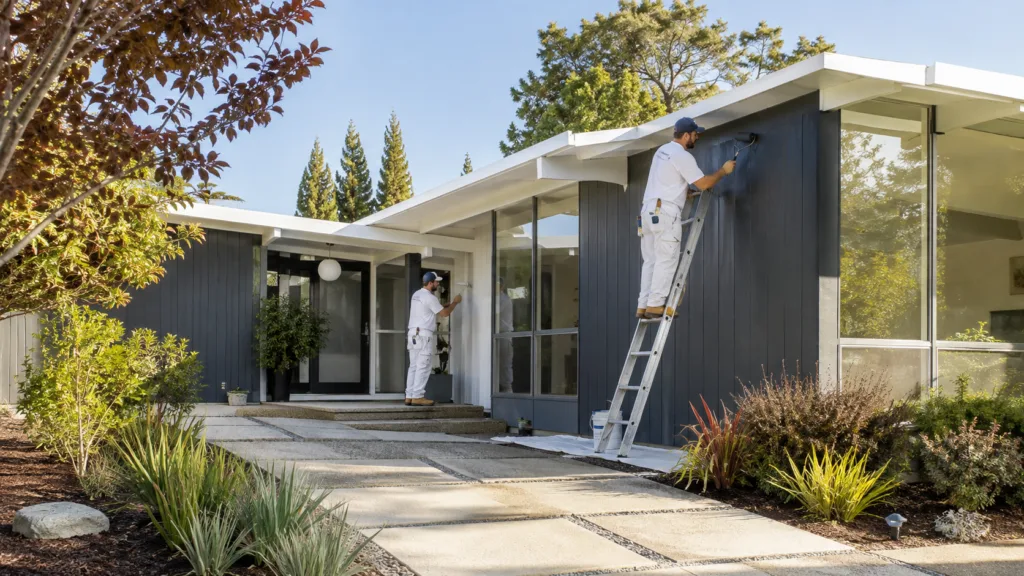
Eichler and mid-century modern homes need a different painting approach than traditional houses. Their vertical grooved siding, exposed post-and-beam construction, low-slope roofs with minimal overhang, and expanses of glass all change how prep, product, and color decisions get made. Every Eichler was also built before 1978, which means lead-safe practices apply to exterior repaints. This guide covers what actually matters when painting these homes in the East Bay, from siding prep to palette.
Joseph Eichler built roughly 11,000 homes in California between 1949 and 1974, and the East Bay has real concentrations of them alongside a much larger stock of non-Eichler mid-century modern and post-and-beam houses. Concord’s Rancho San Miguel neighborhood is the best known local Eichler tract, and mid-century designs fill hillside neighborhoods across Oakland, El Cerrito, Moraga, Pleasant Hill, and Walnut Creek.
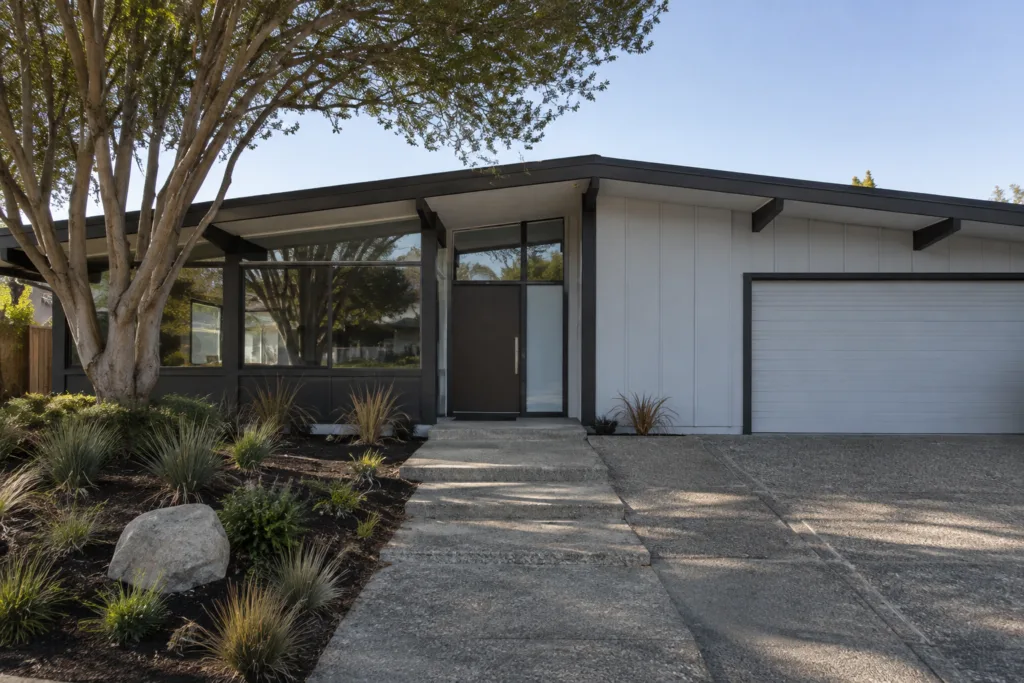
What they share architecturally is what makes them demanding to paint well:
Vertical grooved siding. Most Eichlers use vertical plywood siding with regular grooves. Those grooves channel water downward and hold it, and the plywood is prone to surface checking and delamination as it ages. It also means far more linear feet of edge to coat than flat siding.
Post-and-beam construction with exposed beams. Beams that extend past the roofline are structural and visible, and they take direct weather with no protection.
Low-slope roofs and minimal overhang. Traditional homes get shade and rain protection from deep eaves. These homes largely do not, so siding and beams take significantly more sun and water than a comparable Craftsman would.
Glass walls and slim mullions. Floor-to-ceiling glass means less wall to paint but dramatically more masking, and the narrow frames around it demand clean, precise lines.
Interior wood: tongue-and-groove ceilings and mahogany paneling. Original interior wood is a defining feature, and whether to paint it is the single most consequential decision an owner makes.
The grooves are the whole story. Water sits in them, and old paint fails there first. Proper prep means cleaning the grooves out, not just washing the flat face, then scraping and sanding failing areas, spot-priming bare plywood, and sealing checked or split areas before finish coats. Skipping the grooves is why a repainted Eichler can look tired again within two or three years.
Where plywood siding has delaminated badly, painting over it only postpones the problem. Section replacement before painting is sometimes the honest recommendation, and we will tell you when that is the case. See our surface restoration services for repair work that precedes paint.
Exposed beam ends are the most weather-punished wood on the house. They need thorough sanding, sealing on end grain (where water enters fastest), and a finish rated for full exposure. On many East Bay mid-century homes, beam ends are also the first place dry rot appears, so they get inspected before anything else.
An Eichler can take as long to mask as it does to coat. Full-height windows, sliders, atrium glass, and slim frames all need careful protection and precise cut lines. This is where the time goes on these projects, and where a rushed crew shows.
Every Eichler was built between 1949 and 1974, which puts all of them in pre-1978 territory, along with virtually all East Bay mid-century housing. Disturbing original paint layers requires EPA lead-safe containment, prep, and cleanup. Integrity Paint is an EPA Lead-Safe Certified Firm (#R-R-75920-25-00012), and our lead paint guide for East Bay homeowners explains what that means for your project.
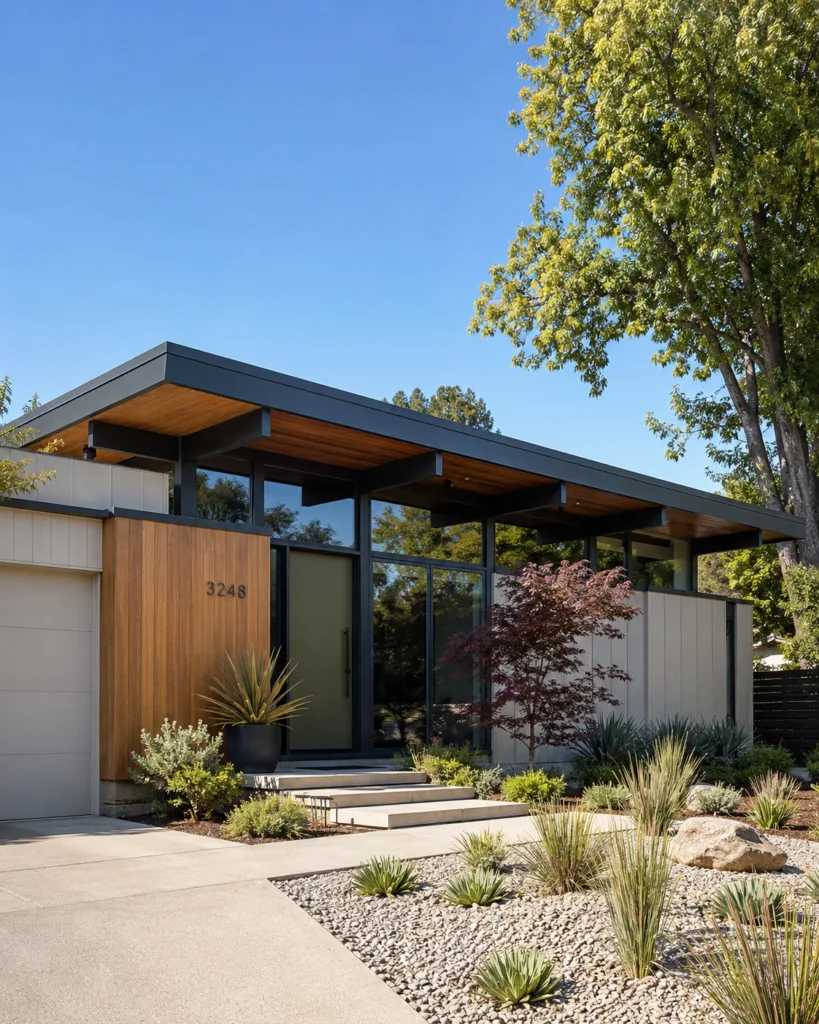
Mid-century homes in the East Bay experience the region’s split climate more harshly than most housing, because they have less roof overhang shielding them.
In Oakland, El Cerrito, and the bayside neighborhoods, marine moisture settles into siding grooves and north-facing walls, and mildew is a recurring issue on shaded elevations. Inland, in Concord, Pleasant Hill, Walnut Creek, and Moraga, the enemy is UV: intense summer sun fades bold mid-century colors faster than it fades muted traditional palettes, and it breaks down lower-grade coatings on beams and south and west walls within a few years.
The practical translation is that these homes benefit disproportionately from premium, fade-rated exterior products. On a house with deep eaves you can get away with a mid-grade paint. On a flat-roofed post-and-beam with beams in full sun, you cannot.
Choosing Eichler paint colors is not the same as picking colors for a traditional house. Mid-century architecture was designed around a specific relationship between color and form: siding planes in one color, beams and trim in a contrasting tone, and a front door treated as a deliberate accent. The most successful repaints respect that logic rather than fighting it.
Warm neutrals or deep, saturated earth tones on the siding, with beams either matched or set a shade deeper. Charcoals, warm grays, olive and forest greens, and muted blues all sit correctly on these homes. The front door is where a bold accent belongs: orange, turquoise, chartreuse, or a strong yellow are all period-authentic and none of them look out of place on a well-executed Eichler.
Heavy multi-color schemes borrowed from Victorian practice, and very light siding colors that flatten the shadow lines the architecture depends on.
Painting original mahogany paneling or tongue-and-groove ceilings is irreversible and it divides owners strongly. Some want the brightness; purists consider it a loss of the home’s character and it can affect resale among buyers seeking original condition. There is no universally right answer, but it deserves a real conversation before the first coat, and we will walk through the tradeoffs with you rather than just quoting the work. For interior projects generally, see our interior painting services.
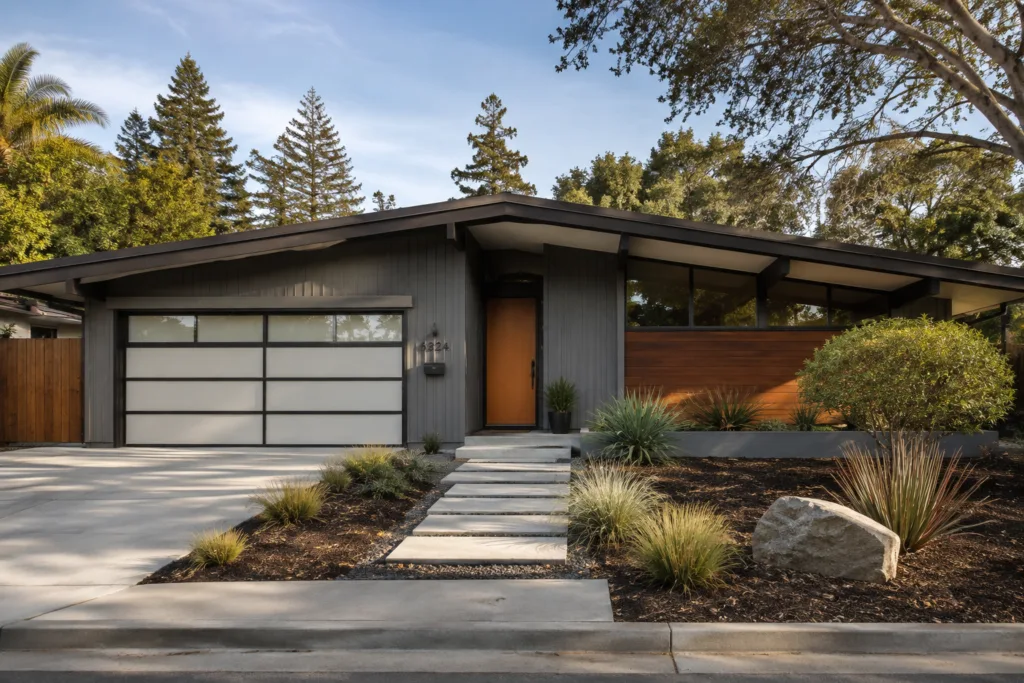
The right Eichler exterior paint for most of these homes is a premium, fade-rated exterior acrylic. These homes have low-slope roofs and minimal overhang, so siding and beams take far more sun and water than houses with deep eaves, and lower-grade coatings fail noticeably faster. Product should be matched to each elevation’s exposure.
Warm neutrals and deep earth tones on the siding, with beams and trim either matched or set a shade deeper, and a bold accent color on the front door. Charcoals, warm grays, olive and forest greens, and muted blues all suit the architecture. Very light siding colors tend to flatten the shadow lines these homes depend on.
It is a personal decision with real tradeoffs. Painting original paneling is irreversible, and while it brightens interiors significantly, purists consider it a loss of character and it can matter to buyers seeking original condition. It is worth deciding deliberately before work begins rather than mid-project.
The grooves channel and hold water, so coatings there stay wet longer and break down sooner. Proper prep means cleaning and prepping inside the grooves, not just the flat face of the siding, which is why a properly prepped Eichler repaint lasts far longer than a quick recoat.
Every Eichler was built between 1949 and 1974, so all of them predate the 1978 ban and may carry lead-based paint layers, as does nearly all East Bay mid-century housing. Any paid work disturbing that paint requires EPA lead-safe practices, which is why hiring an EPA Lead-Safe Certified Firm matters on these homes.
Expect a full exterior on the longer end of the normal 5 to 10 day range, because masking the glass and prepping grooved siding both add time compared to a conventional house. Extensive beam repair or siding replacement extends it further.
Yes. Concord’s Rancho San Miguel neighborhood is the best known local Eichler tract, and mid-century modern and post-and-beam homes are common throughout Oakland’s hills, El Cerrito, Moraga, Pleasant Hill, and Walnut Creek.
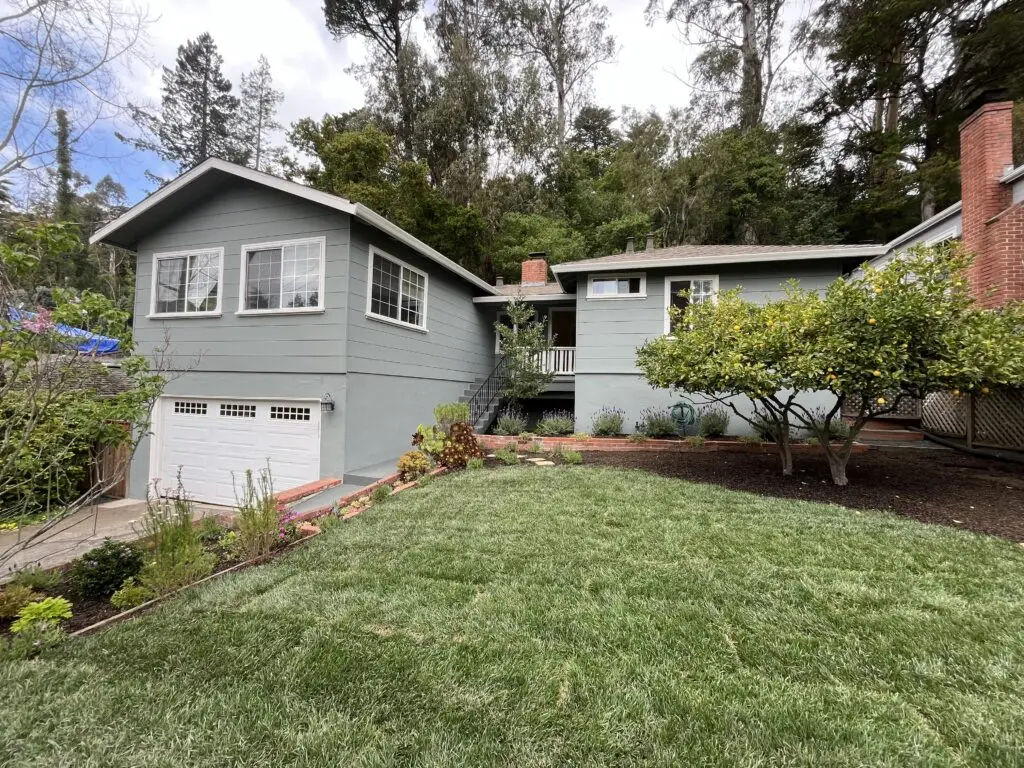
We work on Eichler and mid-century homes across the East Bay, including:
Mid-century homes reward painters who understand what they are looking at, and they punish crews who treat vertical grooved siding like flat siding. Integrity Paint and General Contracting has over 23 years of experience, more than 2,000 homes painted across the East Bay, and over 80 five-star Google reviews. We are licensed, bonded, and insured (CSLB #1021317) and an EPA Lead-Safe Certified Firm, and every estimate comes with a written scope, a clear timeline, and honest guidance on prep and color.
Painting Eichler and Mid-Century Modern Homes in the East Bay Eichler and mid-century modern homes need a different painting approach than traditional houses. Their vertical
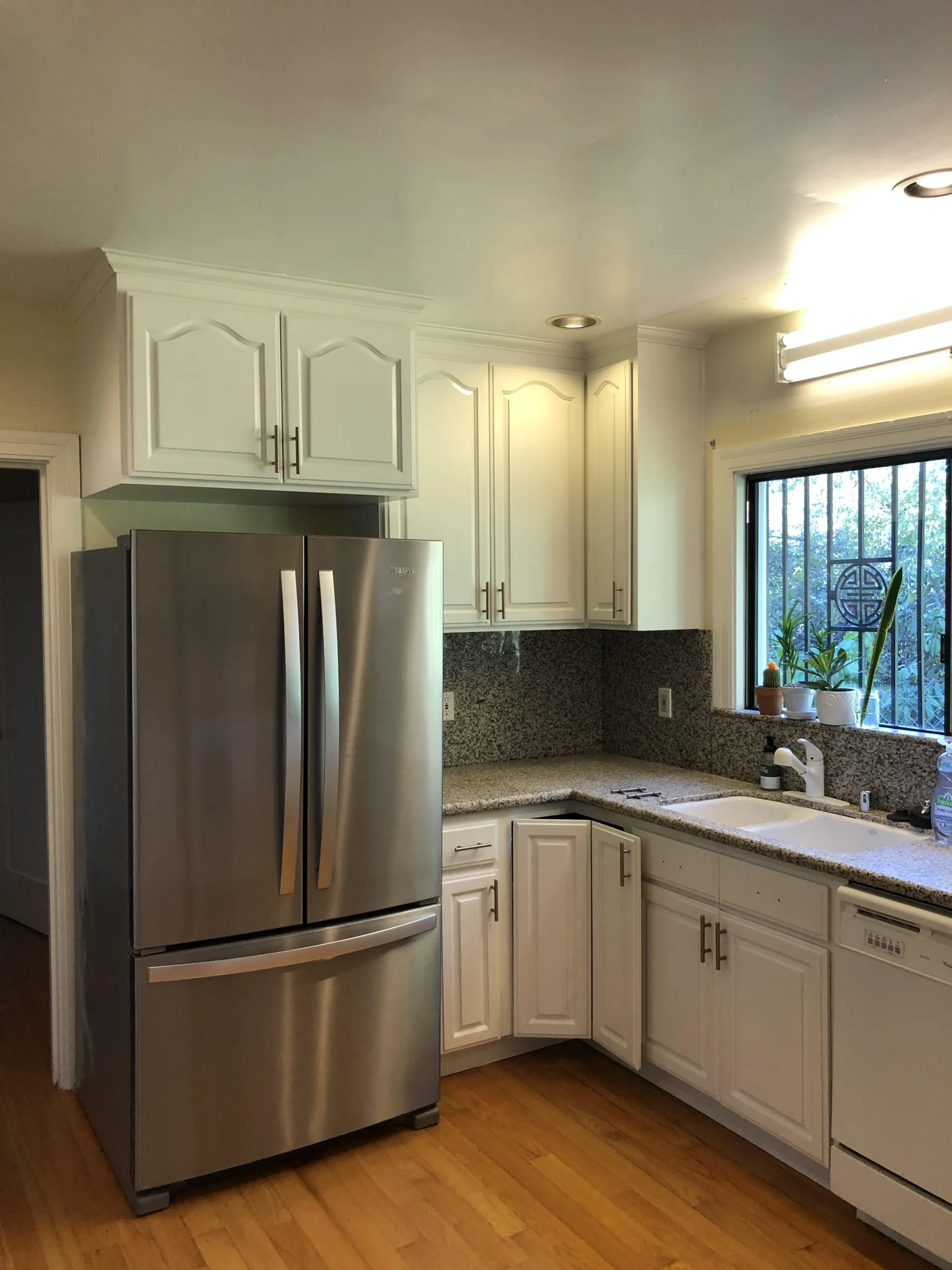
How Long Does It Take to Paint a House? East Bay Project Timelines Opening A single room takes about a day to paint, a whole-home
How Much Does Exterior House Painting Cost in Oakland? Exterior house painting in Oakland typically costs $4,000 to $12,000 for a single-family home, with smaller